ERGO BACKER-ROD CHAIR
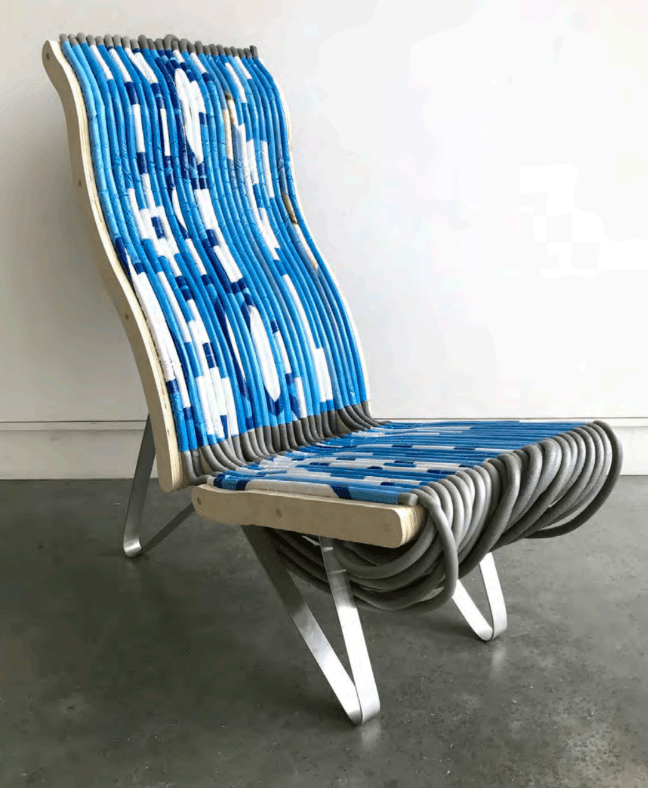
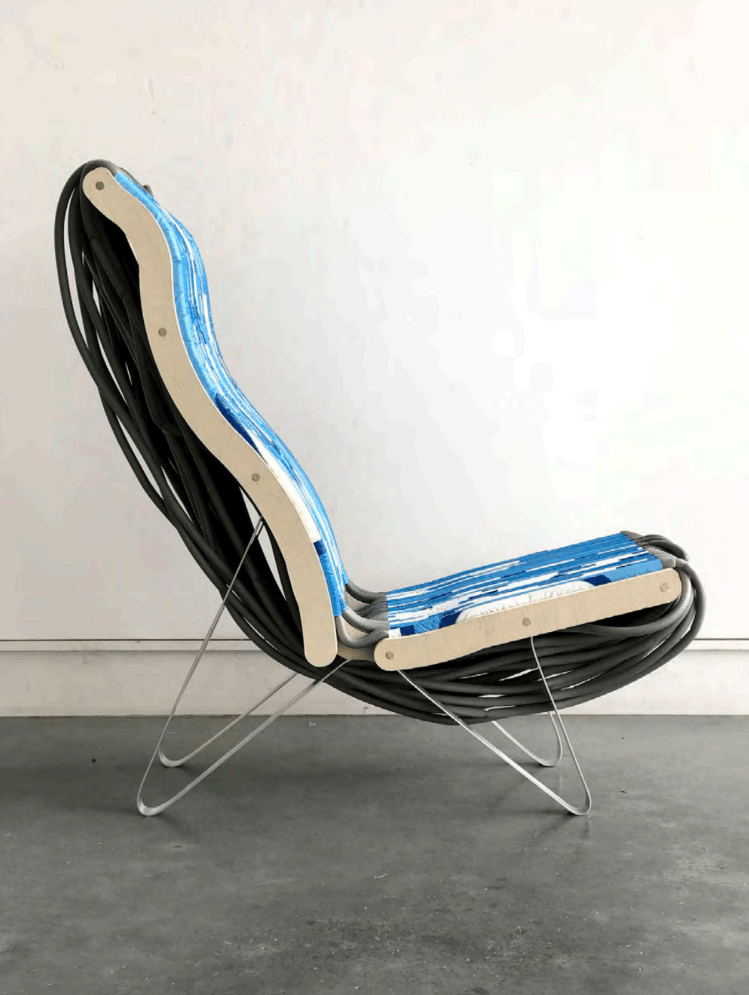
Ergo Backer-Rod Chair is named, admittedly, for the jumble of conflicting ideas I wanted to explore in a single project. At its core, it’s a study in ergonomic customization and material experimentation.
First, the ergonomics: the chair was designed using my own body measurements, creating a rigid form that supports my head, shoulders, back, bottom, and legs in all the right places. I imagine a system where someone could input their clothing size and basic measurements, and the chair-cutting process would generate a custom-fitted profile just for them—a kind of digital tailoring for hard surfaces.
The second layer of exploration is material. I wanted to challenge the norms of upholstery by using unexpected, often discarded materials. The surface is recycled billboard vinyl; the backing is a continuous loop of foam backer rod—usually used to fill gaps around windows before sealant is applied. When layered with precision-cut plywood, the result is a continuous, sculptural form that looks like it shouldn’t be possible—a hybrid of industrial leftovers and ergonomic intent.
WOVEN BOOKCASE
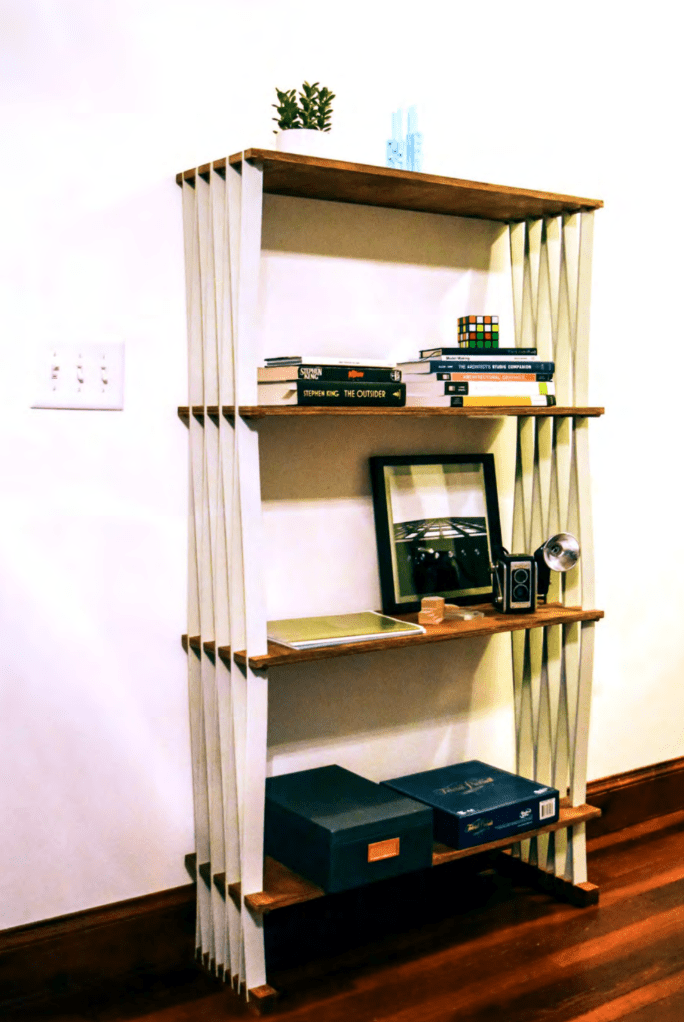
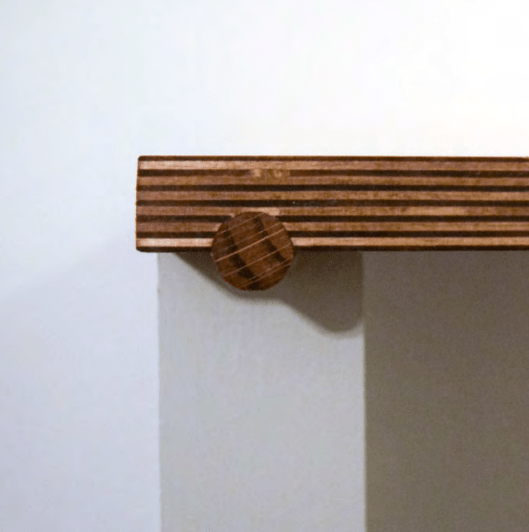
This bookcase is what happens when you spend enough time with a material that you start imagining entirely new ways to use it. During my first summer in grad school, I worked in a cabinet shop and fell hard for Baltic birch plywood. It wasn’t just the clean finish that made it ideal for cabinetry—it was the fact that each layer is a full-thickness veneer. That structure gives it a kind of integrity most plywoods don’t have, allowing it to be sanded, carved, and manipulated more like solid lumber.
That got me wondering: could I treat the edge of the plywood like a structural surface? Could I cut joinery directly into it—tabs and slots like in traditional Japanese woodworking—and have it hold itself together?
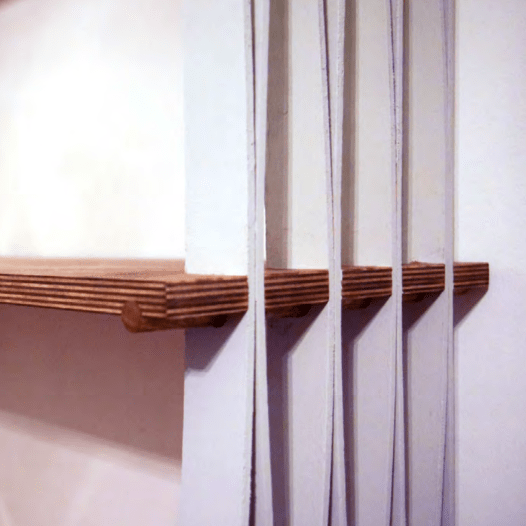
The result is this bookcase. The key detail is the vertical end structure on either side, which slices through the edge of each shelf and locks into place using a combination of a wooden dowel and a half-round routed joint at the underside of each shelf. It’s a quiet trick—but it’s what holds the whole thing together.
 BERT NASH, AIA