Rethinking the Nature of Work
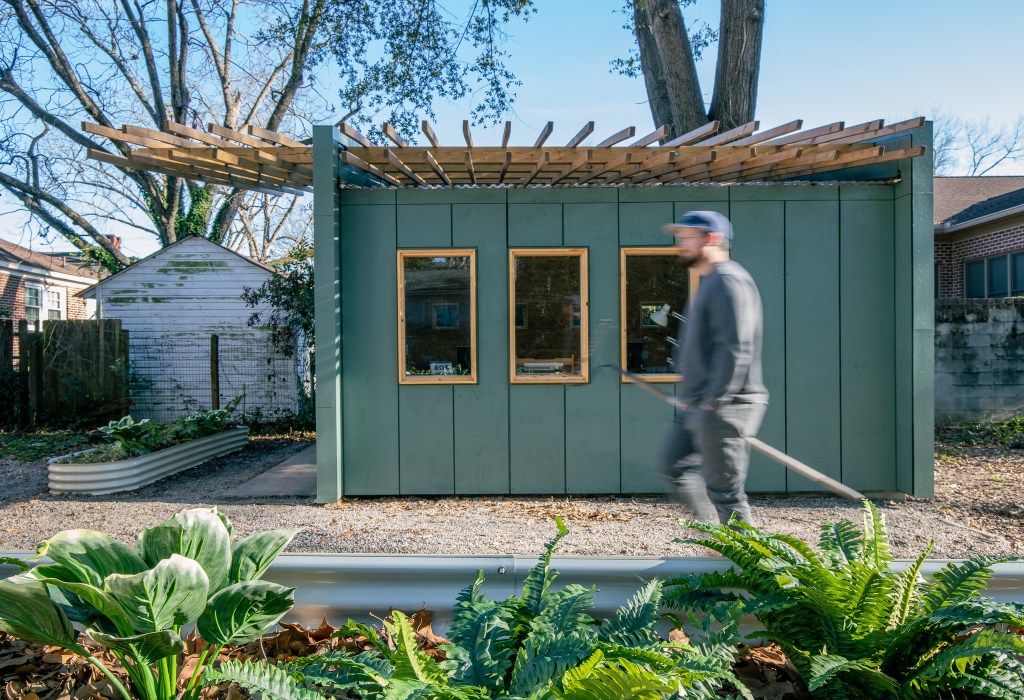
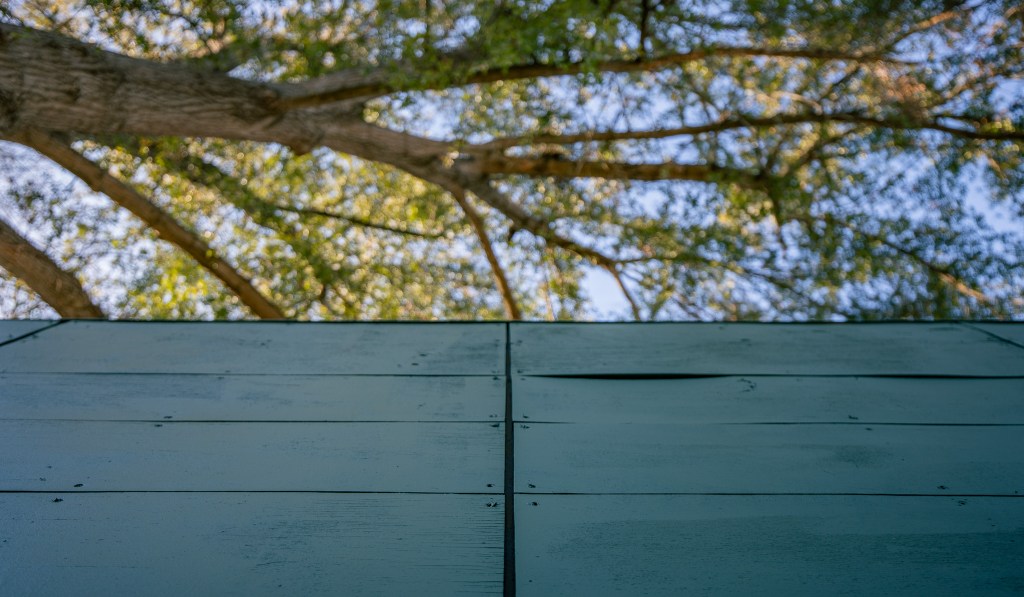
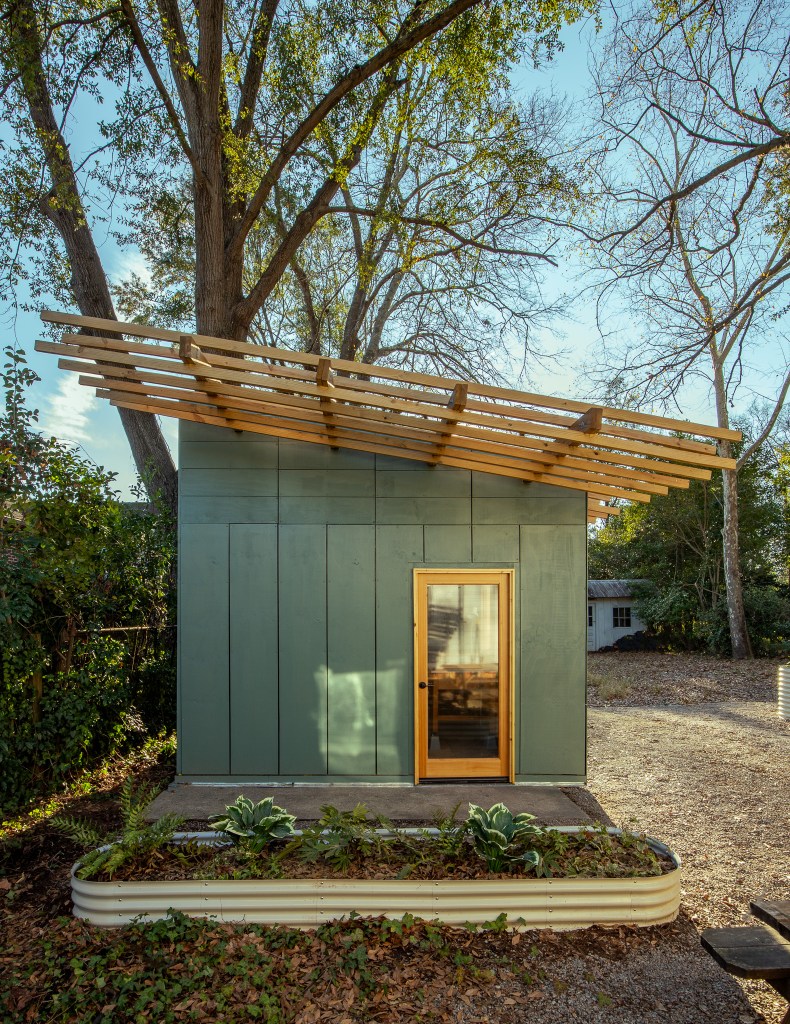
Nestled beneath the sweeping limbs of towering oaks, this 190-square-foot backyard studio is a meditation on the evolving nature of work and the spaces we inhabit. Designed in the wake of the pandemic, it offers a response to the question: What do we truly need from the places where we spend our days?
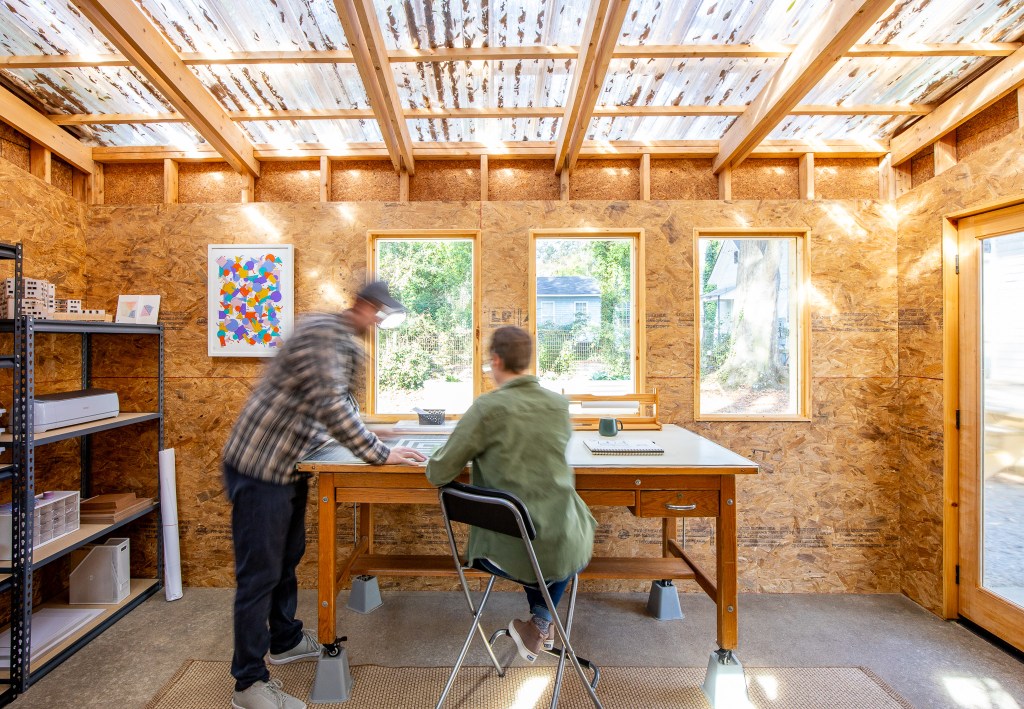
For an architect and designer couple, the studio is not just an extension of their home but an extension of their practice—a space for focus, making, and reflection. The massing responds to the existing concrete pad, grounding the structure in the site’s history. More than a workspace, it is an exploration of light, materiality, and the rhythms of daily life.
The space is exclusively daylit, requiring no artificial light during working hours. It sits lightly within a modest garden, its perimeter defined by a gravel “forest floor” that accommodates human movement where traditional plantings struggle under the dense summer canopy. More than a room, the studio is a threshold—between work and home, between solitude and connection.
Biophilic Design and Connection to Place
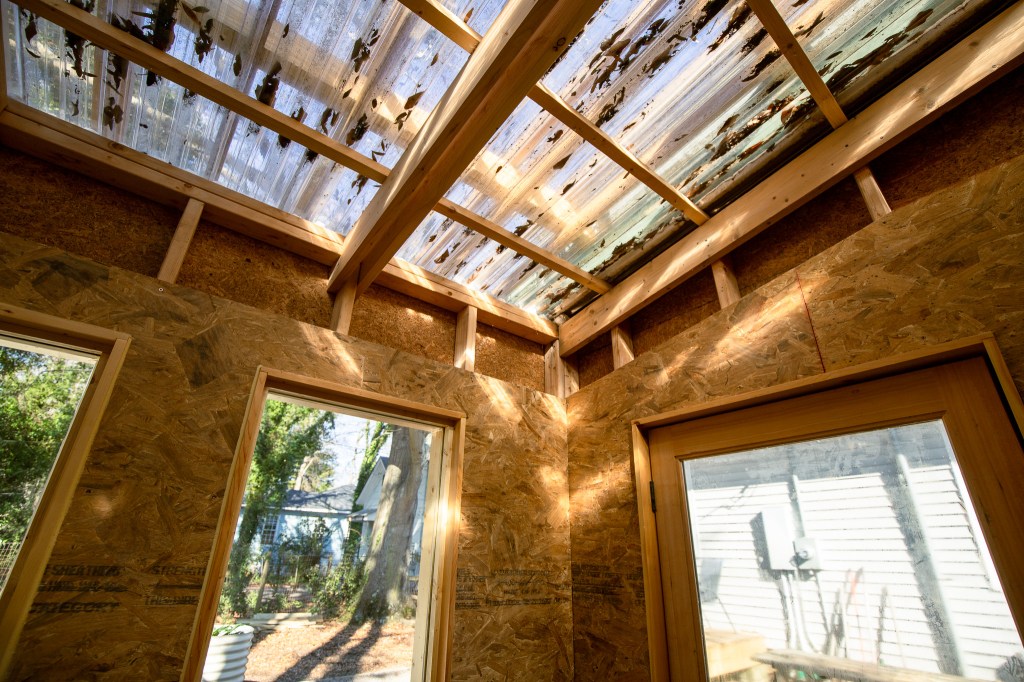
The layered roof is the heart of the design: an exposed wood structure supports a translucent polycarbonate canopy, all protected by a delicate trellis above. This trellis does not seek to imitate the trees but rather to emulate their most essential gift—the shifting, dappled light that transforms throughout the day and across the seasons. In the sweltering summers of the Midlands, the oak canopy offers deep shade; in winter, the leaves fall away, welcoming warmth and light. The architecture follows suit, embracing the natural cycles of the site.
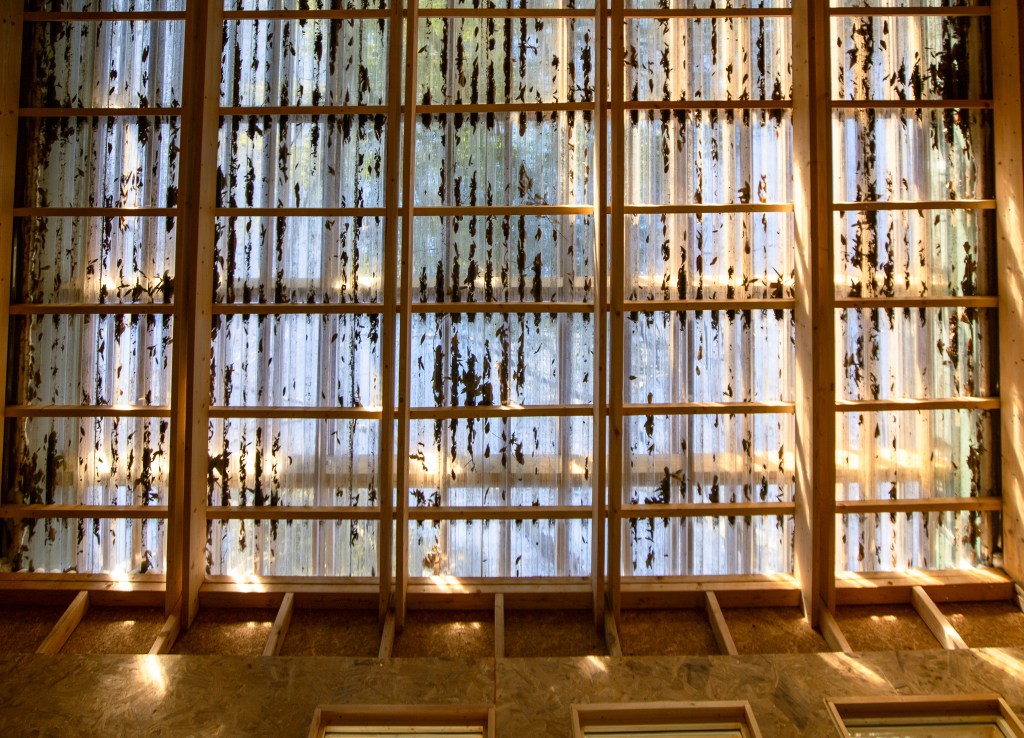
At its core, the studio embodies the biophilic principle of peril and refuge—the idea that nature is inherently unpredictable, and part of our connection to it is the balance between safety and risk. The towering trees above hold both beauty and danger; their presence is awe-inspiring, yet they shed limbs without warning. The trellis mediates this relationship, offering protection while keeping the raw power of nature in full view. Within the studio, one is always aware of the living system beyond its walls—the shifting shadows, the wind moving through branches, the filtered light that marks the passage of time.
A Personal Experiment in Practice
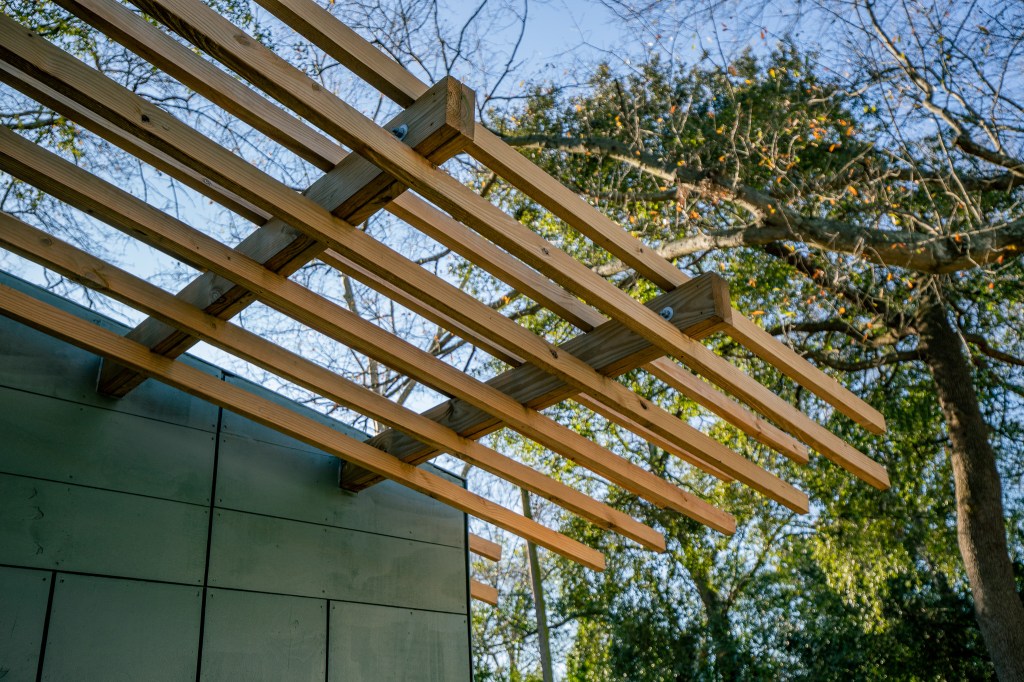
This project was both deeply personal and entirely hands-on—designed, built, and lived with by the designers themselves. It became a kind of laboratory: a place where ideas about space, climate, material, and making could be tested not only in theory but in daily use. Working with a tight budget, the designers sought to elevate off-the-shelf materials through careful detailing and layered assemblies. The studio is both a finished product and a working prototype—one that invites ongoing evaluation.
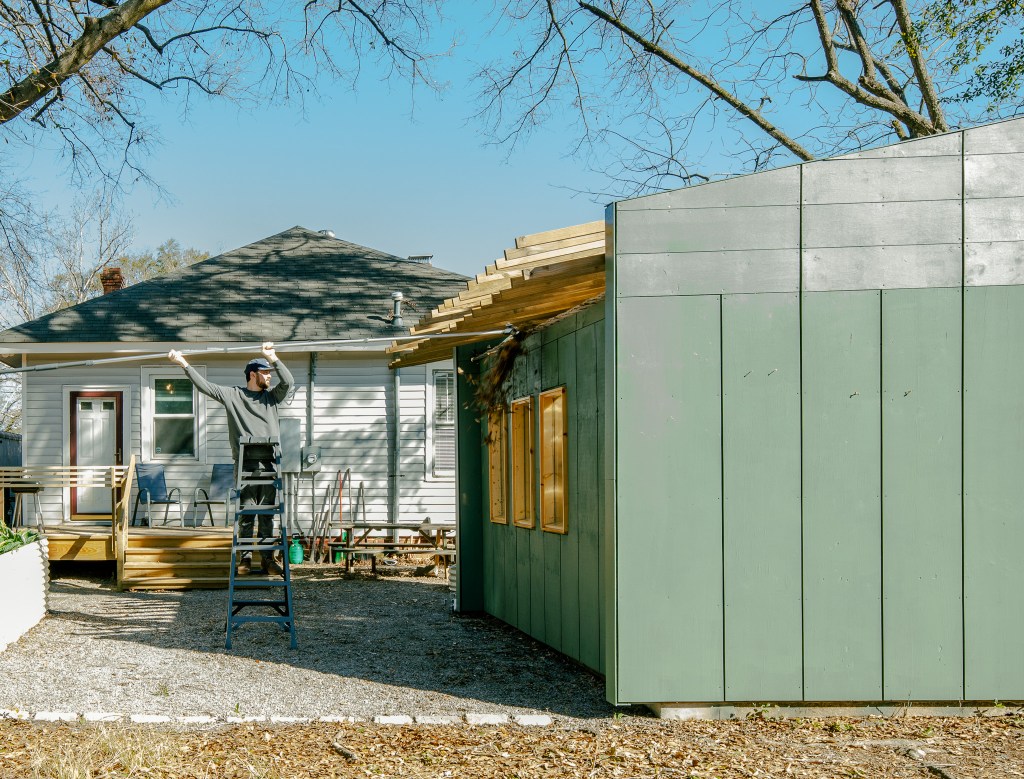
Among the questions explored was the balance between inspiration and upkeep. The layered roof system invites light and openness but also demands care. Maintenance was embraced as part of the design logic: a telescoping broom and ladder are as essential to the space as its drafting table. Here, maintenance isn’t viewed as a burden but as a rhythm—an act of stewardship that deepens the connection between the designers and the space they’ve created. The studio is a reminder that architecture, when lived in closely, is never truly finished—it grows, weathers, and teaches over time.
 BERT NASH, AIA